8 reads like A Midsummer Night's Dream, from Twelfth Night to The Tempest and Puck of Pook's Hill: Shakespeare comedies, magic, and fairy mischief.
Updated June 10, 2026
A Midsummer Night's Dream is Shakespeare's most purely enchanted comedy. Four Athenian lovers flee into a forest ruled by the quarreling fairy king and queen, Oberon and Titania, where Puck's misapplied love potion scrambles every attachment, and a troupe of amateur actors led by Bottom (briefly given a donkey's head) rehearses the world's worst play. It is the one Shakespeare play where the magic is the point: love is shown to be arbitrary, eyesight is not to be trusted, and the whole night might have been a dream.
Most of what scratches this itch is more Shakespeare, so this list leans into that honestly. If the tangled lovers and comic misunderstandings were your favorite part, Twelfth Night, Much Ado About Nothing, and As You Like It are the closest matches. If the magic and the enchanted-place atmosphere drew you in, The Tempest and The Winter's Tale carry that into stranger territory. And for the fairy world beyond Shakespeare, Kipling's Puck of Pook's Hill brings Puck himself back, Allingham's The Fairies distills the folklore, and Wilde's The Importance of Being Earnest delivers the wit with no fairies at all.
A practical note: the plays here are plays, and they read best with a light touch. An annotated edition (Folger and Arden are the standard ones) smooths the language, and watching a good filmed production alongside the text is not cheating, it is how these were meant to land. The Kipling and the Allingham, by contrast, are easy reads straight through.
Books to Read If You Like A Midsummer Night's Dream
Much Ado About Nothing
by William Shakespeare
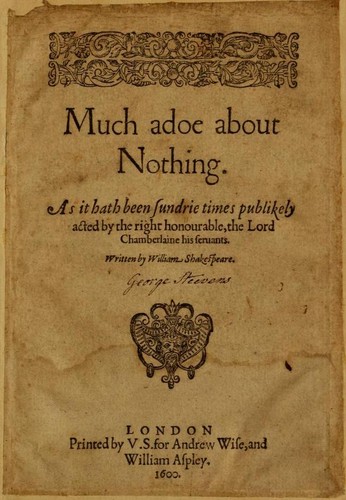
Read this if the bickering lovers were funnier to you than the fairies.
This is Shakespeare's sharpest romantic comedy, and it shares the Dream's central comic engine: people tricked about who loves whom. Beatrice and Benedick, sworn enemies of marriage and of each other, are each fooled into believing the other is secretly in love, and the deception manufactures the real thing, much as the love potion does in the forest. The wit is faster than anything in the Dream; the Beatrice and Benedick scenes are the model for every sparring couple in romantic comedy since.
What it lacks is magic. There are no fairies and no forest, just an Italian villa, and the trickery is entirely human, including a darker strand where the villain Don John's slander against Hero nearly turns the comedy into tragedy. That shadow makes it a more grounded, more emotionally serious play. Pick it if Lysander and Demetrius felt interchangeable to you and you wanted lovers with actual personalities. Skip ahead to The Tempest if the enchantment was the whole appeal.
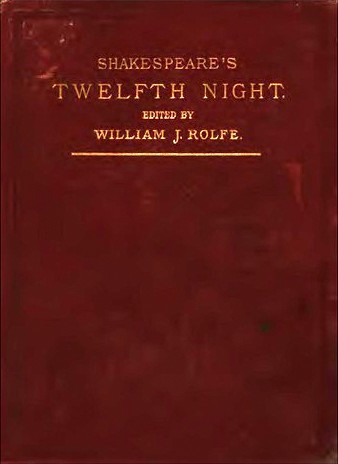
Read this for the closest thing Shakespeare wrote to another Dream.
Twelfth Night is the standard answer to what to read after A Midsummer Night's Dream, and it earns it. The plot machinery is the same gleeful chaos: Viola, shipwrecked and disguised as a young man, is sent to woo Olivia on behalf of Duke Orsino, whom Viola herself loves, and Olivia promptly falls for the disguised Viola. It is the Dream's love-tangle rebuilt out of mistaken identity instead of fairy juice, with the same sense that desire attaches itself absurdly and at random. The Malvolio subplot, where a pompous steward is gulled into yellow stockings and a fixed grin, fills the Bottom role of comedy from below.
The difference is tone. Illyria has no actual magic, and a melancholy runs under the jokes (Feste's closing song, Malvolio's humiliation, Olivia's mourning) that the Dream mostly keeps at bay. Many readers consider it the better play for exactly that reason: the comedy has a price. Choose it first among the comedies here; it is the natural next step.
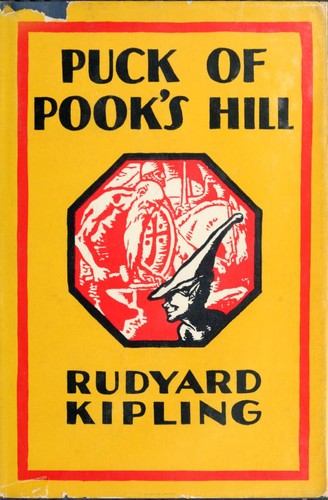
Read this if you want Puck himself back, guiding children through English history.
Kipling's 1906 book is the most direct sequel to the Dream anyone has written. Two children, Dan and Una, perform scenes from A Midsummer Night's Dream three times over on Midsummer's Eve, inside a fairy ring, and accidentally summon the real Puck, the last of the Old Things left in England. He then conjures figures out of the land's past (a Norman knight, a Roman centurion on Hadrian's Wall, and others) to tell the children their stories, with linking poems between the tales. The conceit, that the English countryside is saturated with old magic and older memory, is the Dream's forest atmosphere stretched across centuries.
Be clear about what it is: episodic historical storytelling for children, not a romantic comedy, and the love plots that drive Shakespeare's play are absent entirely. The history-lesson structure can feel quaint, and Kipling's Edwardian patriotism about England dates it. But Puck's voice, dry, ancient, and amused, is a genuine pleasure, and it is the right pick for reading aloud or for anyone who wished the fairies had more page time.
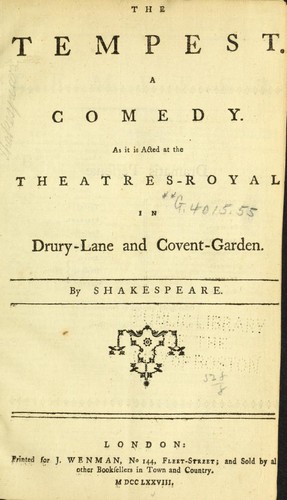
Read this if the magic mattered more to you than the lovers.
The Tempest is Shakespeare's other great magic play, and the pairing with the Dream is natural: both are built around a supernatural ruler stage-managing the mortals who wander into his domain. Prospero, the exiled sorcerer-duke, raises the storm that strands his enemies on his island, and his spirit Ariel plays the Puck role, invisible, fast, and mischievous on his master's orders. There is even a young-love plot, Miranda and Ferdinand, arranged and tested by magic, and the sense that the whole spectacle might dissolve like a dream is made explicit in Prospero's revels speech.
But this is a late play, and it carries weight the Dream does not: usurpation, revenge deliberately set aside for forgiveness, the uncomfortable figure of Caliban and what Prospero's rule over him means, and a magician giving up his art in what many read as Shakespeare's farewell to the stage. It is less funny and more haunting. Read it second, after a comedy, and it will feel like the Dream grown up.
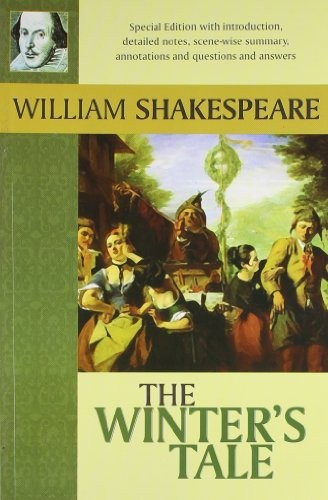
Read this for magic and reunion after the comedy turns dark first.
The Winter's Tale offers the Dream's movement in a heavier key: a poisoned court, then an escape into green-world pastoral, then a restoration that feels like enchantment. King Leontes destroys his family through sudden, groundless jealousy; sixteen years later the play swerves into a Bohemian sheep-shearing festival full of young love (his lost daughter Perdita and Prince Florizel), con-man comedy from the peddler Autolycus, and finally the famous statue scene, the closest thing in Shakespeare to a miracle performed onstage. The forest's transforming power in the Dream becomes, here, the transforming power of time itself.
Know that the first half is genuinely harrowing, closer to Othello than to any comedy, and the play's two halves are so different that critics file it as a romance rather than either genre. It also contains the most famous stage direction in theater, exit, pursued by a bear. Pick it when you are ready for the Dream's reconciliations to be earned through real loss. It is the most emotionally rewarding play on this list.
Read this if the forest, not the fairies, was the place you wanted to stay.
As You Like It is Shakespeare's fullest green-world comedy. Rosalind, banished from her uncle's court, escapes disguised as a young man into the Forest of Arden, where exiles, shepherds, lovers, and the melancholy philosopher Jaques all wash up and are changed. It runs on the same premise as the Dream, that leaving the rule-bound court for the woods loosens identity and lets love rearrange itself, but it swaps fairy magic for the human kind: Rosalind, in disguise, coaches her own suitor Orlando in how to woo her. She is the best part, arguably the best comic heroine Shakespeare wrote.
It is more leisurely than the Dream, more talk than plot; whole scenes are just people in a forest debating love, time, and country versus city life, including the all the world's a stage speech. Readers who want farce-speed complications may find it slow. Choose it for atmosphere and for Rosalind, and read it outdoors if you can.
Read this for the wit and absurd misunderstandings with zero supernatural help.
Wilde's 1895 comedy is the Dream's farce machinery perfected and stripped of magic. Two men invent fictional people (a fake brother named Ernest, a fake invalid friend named Bunbury) to escape social obligations, two women declare they could only love a man named Ernest, and the misunderstandings compound with the same geometry as the lovers' quarrels in the forest, except every absurdity is self-inflicted. Line for line it is the funniest thing on this list, and the only rival Shakespeare's comedies have for sheer quotability.
The sensibility is entirely different, though. Wilde's world is drawing rooms, cucumber sandwiches, and Lady Bracknell's interrogations, and the play's target is Victorian social hypocrisy rather than love's irrationality; there is no forest, no wonder, and nothing at stake emotionally, which is part of the joke. It is also short and reads almost effortlessly compared to Shakespeare. Pick it when you want the laughter without the moonlight.
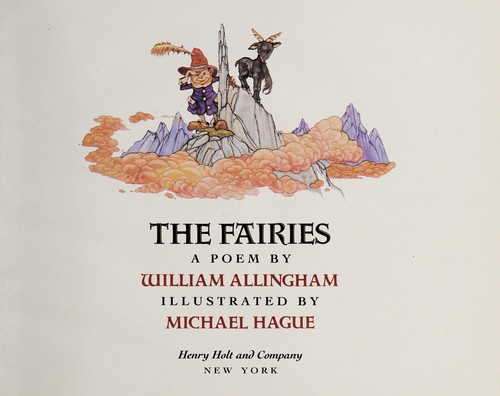
Read this for the folklore fairies in ten minutes, darker than Shakespeare's.
William Allingham's poem, with its famous opening, Up the airy mountain, down the rushy glen, we daren't go a-hunting for fear of little men, is the most concentrated dose of fairy atmosphere on this list. The Irish poet draws on the folk tradition that fed Shakespeare's fairy lore: trooping fairies in the wild places, mischief done to mortals, and the stolen child, little Bridget, taken away for seven years. Yeats admired Allingham, and you can hear why; the rhythm is incantatory, made to be read aloud, and it restores the genuine eeriness that folklore fairies had before they were made cute.
Obviously this is a short poem, not a play or a book, so it is a chaser rather than a meal; seek out an illustrated edition or an anthology of Allingham if you want more than a few pages. Its fairies are also closer to Shakespeare's dangerous side, the Oberon who feuds and the Puck who frightens housewives, than to anything gentle. Read it aloud once and the refrain will stay with you.
Which Shakespeare play is most like A Midsummer Night's Dream?
Twelfth Night is the closest in comic structure, with mistaken identities and a love triangle as tangled as the lovers in the forest. The Tempest is the closest in atmosphere, since it is Shakespeare's other play built on magic, with the spirit Ariel filling a role much like Puck's. Most readers go to Twelfth Night first.
Are there novels based on A Midsummer Night's Dream?
Kipling's Puck of Pook's Hill on this list brings Puck himself into a children's book. Beyond it, the play echoes through fantasy fiction: Neil Gaiman wrote a celebrated Sandman comic issue about the play and used its fairy court in his series, and Oberon, Titania, and Puck appear throughout modern fantasy, from Susanna Clarke's footnoted fairy lore in Jonathan Strange & Mr Norrell to countless retellings.
Should I read A Midsummer Night's Dream or watch it first?
Watch it if you can. It is short, fast, and written to be performed, and the comedy of the mechanicals' play-within-a-play barely registers on the page compared to the stage. A filmed production paired with an annotated text (Folger or Arden editions) is the easiest way in, and the same advice goes for the other plays on this list.
Is A Midsummer Night's Dream a good first Shakespeare play?
Yes, it is one of the two or three most common starting points, along with Romeo and Juliet and Macbeth. It is short, the four interwoven plots are easy to follow, and the comedy still lands. If you enjoyed it, Twelfth Night and Much Ado About Nothing are the natural next comedies before attempting the heavier late plays like The Winter's Tale.
As an Amazon Associate, we earn from qualifying purchases. · About & methodology